Should TV pirates have a sinking feeling?
The people behind the pirate radio stations have their sights set on TV
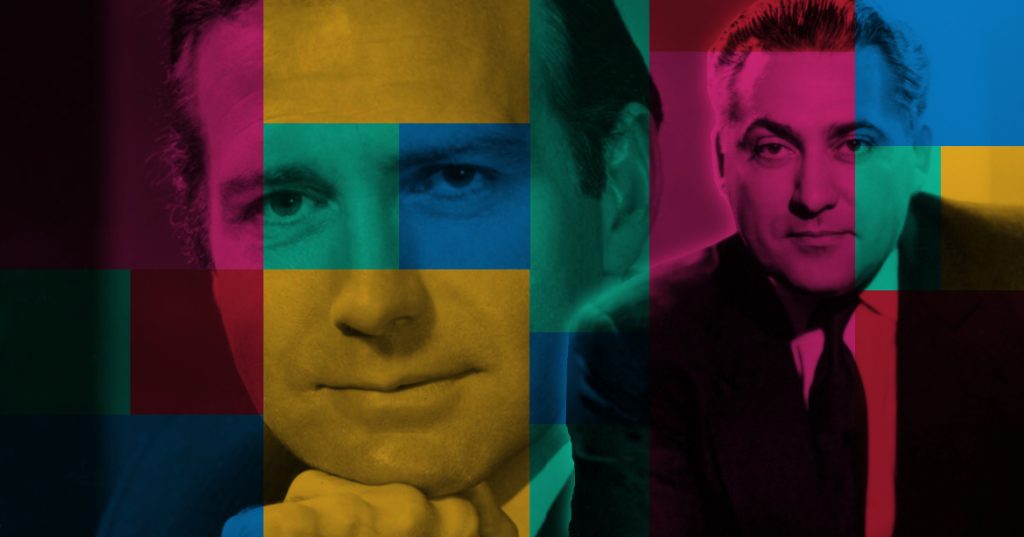
A letter to the Press recently congratulated the “enterprising” people planning to open a pirate TV station.
“I am sick and tired of the low standard of the majority of programmes on BBC and ITV,” said the letter. “Let us hope a bit of competition will make the channels improve the standard of programmes.”
While this letter should gratify Mr. Ronan O’Rahilly, the young Irishman who ran Radio Caroline and is now the inspiration behind this venture into illegal TV, it might surprise him that anyone could possibly imagine that his aim was “to improve” the existing standards of programming.
Such information as has filtered out about the precise nature of the output of Caroline of TV indicates that it will primarily be transmitting “pop” programmes, old films and some documentaries. “Some” in this context is probably a euphemism.
Unless the generally accepted definitions of “low standard” and “improve” are stood on their heads, it seems that hopes of better quality shows through pirate TV are bound to be unfulfilled.
What is more likely to be shown is the dregs and left-overs of Continental and American filmed or taped shows interrupted at inordinate length by advertisements for products manufactured by non-British firms.
I assume it will be feasible to hurl this electronic garbage at us by means of Super Constellation aircraft circling 20,000 feet over the North Sea with bases for take-off, landing and re-fuelling in Holland and France.
But knowing the way fogs settle in over Northern Europe during the winter, I have my doubts about the changes of maintaining a service from 6 p.m. until 2 a.m. nightly consistently during December, January and February.
Well, what harm will it do anybody, some may ask, if these adventurous young men risk their energy and cash trying to pump this nonsense to us?
Threats
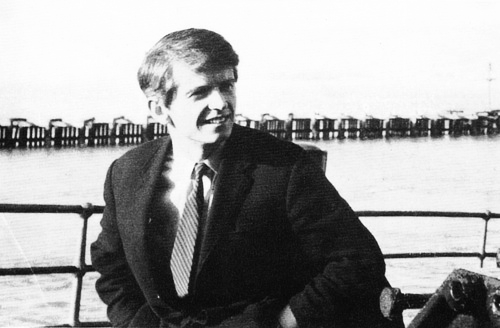
The postmaster General, Mr. John Stonehouse, has already indicated his extreme displeasure about the enterprise and has uttered magisterial threats about what the Government will do should Mr. O’Rahilly and Mr. George Drummond, his principal backer, proceed with their plans.
“We will use all the powers at our disposal to ensure that pirate TV broadcasting is in no way successful,’ said Mr. Stonehouse. And if it cares to use its formidable resources, the Government will not have to resort to shooting down the Constellations in order to make pirate TV a very uncomfortable proposition, indeed.
Of course, Mr. Stonehouse is perfectly right in warning off at this early stage those preparing to take part in this TV nuisance.
It is becoming more and more evident that TV, in its impact on society, is a far more potent and conditioning medium than ever radio was.
What could be tolerated on radio because it was frivolous, insignificant, peripheral takes on a new force and quality once it is translated into TV terms.
Already the steady deterioration of programmes in order to give the public what it presumably wants (which is Caroline TV’s philosophical justification) is paying ugly dividends in the way in which it is trivialising institutions and leaders, encouraging apathy, normalising violence, cheapening standards, cultivating glib, slick and superficial values.
Anarchy
Such safeguards as the number of advertisements to be shown per hour, the standard of films to be transmitted when young children are likely to see them, the payment of regulated fees to musicians and other artists, the quota regulations which have prevented British TV from being flooded with the worst excesses of the American TV scene, will have no legal or administrative sanctions as far as Caroline TV is concerned.
Just when a few responsible people are finally becoming conscious of the significance of the TV factor in our lives, it would be intolerable to witness such an incursion of visual anarchy into our living-rooms on top of the dubious stuff we are already getting.
I doubt, however, if Mr. O’Rahilly, Mr. Drummond and their backers will be either convinced or perturbed about the possibilities of their contemplated output having any deleterious impact upon the fabric of our society.
Like almost everybody else, they will no doubt pooh-pooh such Cassandra-like predictions.
What might give some of them pause, however, is a cool, unemotional analysis of the financial prospects of their adventure and the odds-on chances that anyone who puts money into such a reckless scheme to almost sure to come out of it with both an empty and chastened pocket.
The essence of a venture like Caroline TV is that there is an audience that wants it and that enough of them will be able to look at it.
If there was really a mass viewing public panting for “pop” programmes you can be sure that such conscientious ratings figures as Paul Fox of BBC-1, or Brian Tesler of Thames TV or Lew Grade of ATV would be providing them.
At the moment the BBC’s Top of the Pops and Decidedly Dusty are the only programmes currently scheduled that might come into the category of the entertainment promised by Caroline TV. ITV has none of them.
It costs something like £3,000 [£45,000 in today’s money, allowing for inflation — Ed] to put on Top of the Pops, and it is quite clear that Caroline TV is not going to be spending anything like that sum for its competing programmes.
And since British artists will be forbidden to appear on their programmes, it will mean that stars like the Beatles, the Stones, and most of the groups that regularly make the Top Twenty will not be seen on the pirate station.
Access
In other words, for their top treats, Caroline TV will probably rely on third-rate shows filmed or taped on the Continent and America — if they were not third-rate our own network boys would have bought them long ago — and repeat this stuff mindlessly and excruciatingly two or three hours daily.
But assuming that is what the kids wants, will they get access to the one set in the home to look at them?
Unlike the situation in radio where the teenagers carried their own transistor sets and determined the choice of programmes they wanted, the TV set is a family affair. It has to be shared with Mum and Dad.
Are the parents going to give up Coronation Street and Z-Cars and Match of the Day, so that the teenager in the house can listen to a continuous yowl for an entire evening? Not bloody likely.
Thus not only will Caroline TV be transmitting on a minority wave-length which can be received only by sets able to receive BBC-2 but it will be broadcasting to youngsters who will have no access to the switch on the set.
Advertisers can thus count on an audience of minuscule size until Britain becomes a two-set nation. And with the cost of colour TV sets that is a good five years away.
Dubious
Even worse, not only are advertisers going to be paying too much per thousand viewers no matter how cheaply they can buy advertising space, but they will never really know just what sort of audience they are getting.
Since the costs of running a ratings service are formidable — and the one used by commercial TV needs instruments affixed to a sample of sets in homes — the statistics that advertisers will receive about their commercials will be dubious in the extreme.
A million pounds or so may not be much to lose. But investors in pirate TV look set fair to seeing their money rapidly being washed down the drain in this electronic sewer.