Hog, without the acid, even more corrosive
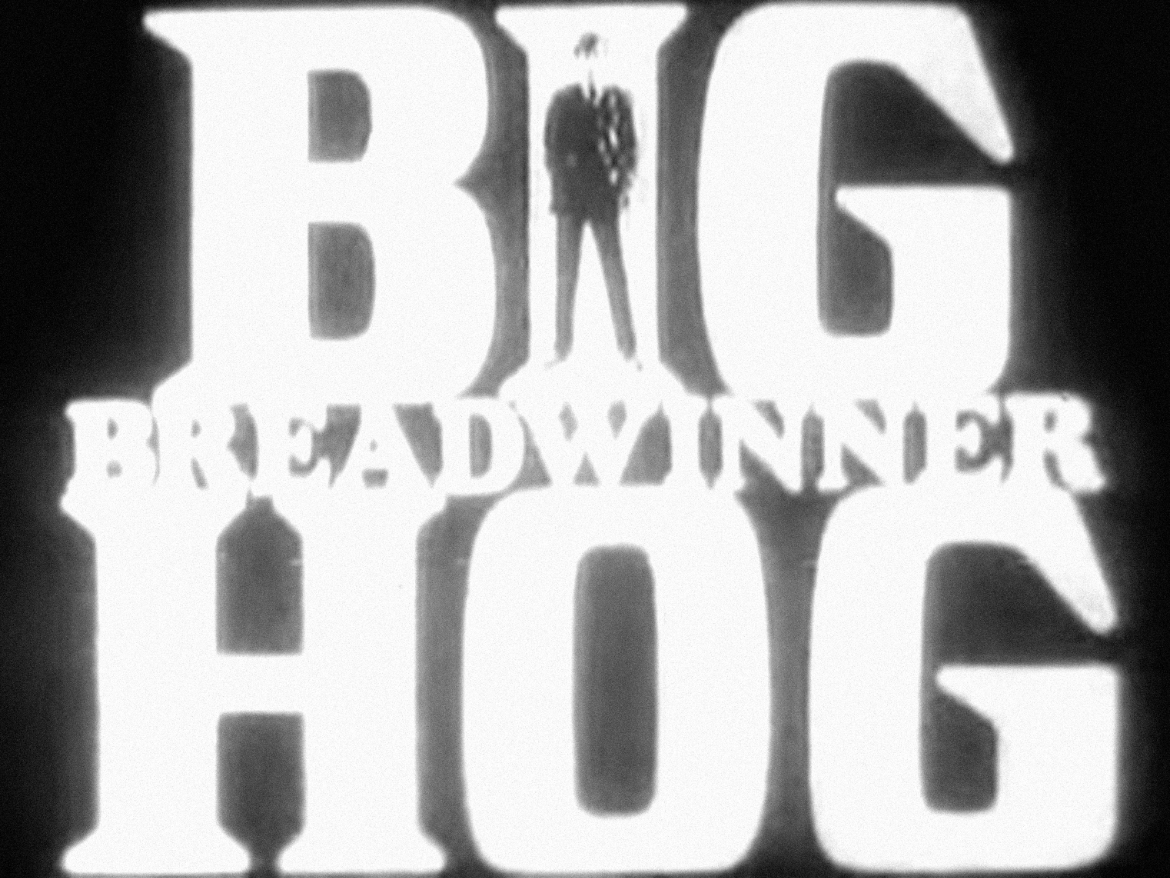
Granada’s new crime series Big Breadwinner Hog got off to a shocking start. Has it improved? Grumpy critic Milton Shulman tells us

The commercial channel — home of the bland, the safe, the innocuous, the trivial — was last week hit with a barrage of what the BBC has become very adept at ducking — viewer’s protests.
Granada’s crime series, Big Breadwinner Hog, let them in for it. The realism of certain shots showing feet being kicked into a victim’s stomach; a girl being threatened with a razor; and acid being thrown into a hoodlum’s face to the accompaniment of appropriate screams was more than its usually comatose audience could take.
Since this same audience has watched without a murmur the massacre of thousands of Indians in Westerns; the slaughter of countless gangsters in series like the Untouchables; the immolation, electrocution, disintegration, atomisation of hundreds of humans in series like The Avengers, the violence depicted in the first episode of Big Breadwinner Hog must have been extremely ugly to arouse such an unprecedented outburst of ‘phone calls and letters of protest to the ITA.
DISTURBING
“The degree of violence in Act 3 of the first episode is regretted by the Authority,” ran the official ITA apology. “It should not have been shown and will not be repeated … in any subsequent episode.”
Having then belatedly sat through the second episode, the Authority gave it its hygienic benediction. The violence had presumably been purged from all the future episodes.
We now not only had the word of Granada about this, but also that of the ITA. Not having seen the first episode, it was naturally my duty to watch the second. To see what all the fuss had been about. Judging from the absence of protests about last Friday’s episode, one must assume that the public, too, was now amenable to the transmission of Big Breadwinenr Hog — its theme, its message, its purpose — in its present form.
Perhaps the most disturbing part of the ITA’s statement was its view that if any episodes seemed to glorify juvenile delinquency or crime, even if they contained no violence, they would be dropped.
Having solemnly sat through Episode Two, the ITA decided it did not glorify crime. The public, too, by their acquiescence have seemed to agree that Episode Two could not do them any harm.
PUNCH-UPS

What then, is wrong with me? In my opinion, this second instalment of Breadwinner Hog was as clear-cut a glamorisation of crime — its rewards, it excitement, its thrills – as anything I have seen on the small screen for a very long time.
The fact that it did not contain any obvious punch ups, any sadistic maulings, any gory beatings made it, as far as I was concerned, more potentially corrupting than less.
It can be argued — as indeed the series producer, Robin Chapman, has argued — that the incidents of violence provide an essential balance to the undoubted attractiveness of a life of crime.
It is not the fear of the police or a jail sentence that makes crime such an unpleasant existence. It is the sordid company one has to keep, the tiny minds associated with it, the fear of being double-crossed, the prospect of being slashed by one’s friends, buried in a cement coffin by one’s acquaintances, the transitory glory that can end very quickly with a bullet in the brain.
EXPLOITATION
If these horrific sanctions are removed, then the world of the law-breaker becomes most tempting indeed. Outwitting society and the police is the thrill of the game. A few years behind bars is a relatively small price to pay for such fun.
Purging all violence from a series like Breadwinner Hog — and leaving the rest of its elements untouched — takes away from it the one effective deterrent against the aggrandisement of crime.
Granada’s series is exploitation of the crime adventure story. Judging from its second episode, its literary and moral content is somewhat sub-Mickey Spillane. It has no artistic merits that I could discern which would justify it any special consideration as a work of vision or sensitivity.
The details of what everyone is up to are unimportant. It is essentially a gang warfare story with a young, handsome, long-haired crook taking over from a sedate, middle-aged crime syndicate.
The younger lads — debonair, sharp-suited, quick-witted – are not only much smarter than the old boys but have a devilishly easy time robbing no fewer than three jewellery shops in one night.
Other rewards besides easy money are the pretty girls ready to do anything to please them. To get a vital key, Hog’s girl friend readily goes to bed with the slimy store manager so that she can rob him of this vital piece of equipment.
By the end of the episode, Hog — a handsome, sadistic fellow with the morals of a ponce – has everything going his way. He’s rich, got girls, success, respect, fun.
Yet Granada claims, according to a spokesman, that this does not “romanticise violence or glorify crime.” Personally, I cannot think of any more delectable way of making a living.