Will the Royal Family live to regret that film?
Cameras followed the Queen for a year and the monarchy may never recover
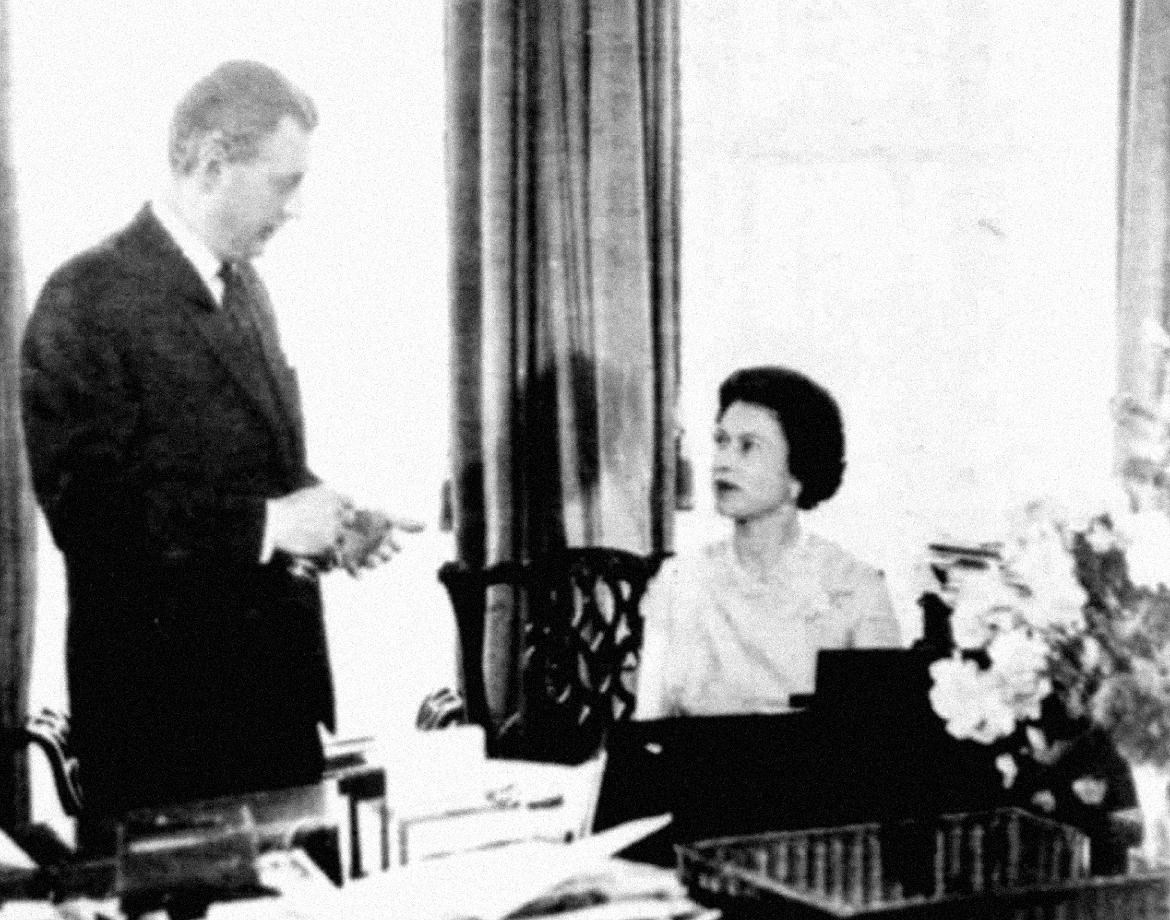
Richard Cawston’s film, Royal Family, which was seen for 100 minutes on BBC-1 last Saturday night [21 June 1969 — Ed], could not have had a better critical reception had it been the combined work of Eisenstein, Hitchcock and Fellini.
Unique, absorbing, engrossing, fascinating, hilarious, charming, were part of the repertoire of congratulatory adjectives that were showered upon this glimpse of the intimate, as opposed to the public, life of the Queen and her family.
It is possible to predict that it will be one of the biggest successes in the history of British television. Its viewing figures will be astronomical. Its foreign currency earnings are likely to be formidable. It should be as popular abroad, particularly in the United States, as it has been in this country. It will be repeated endlessly.
Predictable
To some extent this success was predictable. There is an almost insatiable appetite for details about the private lives of living monarchs.
No royal family has been plagued by this mass curiosity more than our own. Any ex-governess, butler, chef, chauffeur with tittle-tattle about the backstairs workings of Buckingham Palace had a lucrative best seller on their hands until the Queen’s advisers took some strenuous steps to stop the marketing of this kind of gossip.
Once the Queen had given her consent to a BBC-ITV consortium to allow cameras to follow her about for almost a year, recording never-before filmed activities of an English monarch at work, at play, relaxed and off duty, the result was guaranteed an audience of hundreds of millions.
Considering the narrow and sensitive path he had to tread between protocol and the technical demands of film-making between reality and indelicacy, between intimacy and intrusion, Richard Cawston’s selection of incident and minutiae is almost a miracle of taste and discretion.
One might niggle at the fact that the film was too long, that its characters were almost embarrassingly flawless, that the atmosphere was aggressively cosy, but as a revelation for the first time visually of what the job of being a British monarch means, how it is done and where it is done, this was a significant TV occasion.
But the making and showing of such a film, with the monarch’s co-operation, may have constitutional and historical consequences which go well beyond its current interest as a piece of TV entertainment.
Already the argumentative lines seem to be drawn. The Times hailed it as “an important film,” in some ways akin to George V’s first Christmas radio broadcast, which “for many years provided the strongest bond between the sovereign and his people.”
The Sunday Telegraph was, however, less sure of its beneficial effects on the monarchy. “Now that we have seen the Queen buying lollipops for Prince Edward,” it asked, “or helping prepare a family barbecue in the grounds of Balmoral Castle, will the next solemn procession of the Garter Knights at Windsor, with Her Majesty at the head, seem more dignified, or more ludicrous?”
Far-fetched
Before taking sides about its ultimate value to both the Crown and the nation, one must first of all ask oneself what this small film has really done.
To suggest, as some commentators have done, that most people, having seen the film, are now very much closer to the truth about the Royal family is certainly far-fetched.
What has actually happened is that an old image has been replaced by a fresh one. The emphasis on authority and remoteness, which was the essence of the previous image, has, ever since George VI, been giving way to a friendlier image of homeliness, industry and relaxation.
But just as it was untrue that the Royal family sat down to breakfast wearing coronets as they munched their corn flakes so is it untrue that they now behave in their private moments like a middle-class family in Surbiton or Croydon.
Judging from Cawston’s film, it is fortunate that at this moment of time we have a Royal family that fits in so splendidly with a public relations man’s dream.
A hard-working, conscientious, devoted Queen; a dynamic, handsome, smile ever playing around the lips Prince; children untempted and unaffected by the permissiveness, violence-orientated, drug-taking propensities that trouble so many other parents; relatives that conveniently are doing well in the arts or industry.
That they are as perfect as Mr. Cawston’s documentary suggests, they would, I am sure, be the first to deny. Perhaps, even glimpsing between the cuts, there are hints of small human failings that Mr Cawston expected us to recognise
When Prince Philip light-heartedly asked of someone “What’s that tie? Alcoholics Anonymous?” is it possible that the tie-wearer didn’t see the joke and subsequently either burnt the tie out of humiliation or studied himself in a mirror to see if there were any symptoms of alcoholism in his face to warrant such a crack?
Sympathetic
And which diplomat is now examining himself to see if he has the short body and long arms that was the source of the Queen’s funny, but wicked, story of the arrival of a gorilla for an audience with her?
For me, in any case, it was these little asides — gossipy, somewhat malicious, even rather cruel — that made the family much more human and sympathetic than all those cosy sequences of barbecuing, buying ice-cream and watching Lucille Ball on the telly.
Yet is it, in the long run, wise of the Queen’s advisers to set as a precedent this right of the TV camera to act as an image-making apparatus for the monarchy?
Every institution that has so far attempted to use TV to popularise or aggrandise itself has been diminished and trivialized by it.
Throughout man’s history, institutions like the Church, the law, the Army have maintained their authority by an adherence to remoteness and ritual. The uniforms of Field-Marshals, the gowns and wigs of judges, the cathedrals and vestments of the clergy have been an essential masquerade to disguise the basic weaknesses and fallibility of so many men who have asserted their right to lead and command.
TV however, strips these men and institutions of their disguises. The Field-Marshal, out of uniform, turns out to be a thin faced, frail man with a piping voice who looks like a book-keeper.
So, too, do the archbishop and the judge take on the garments of vulnerability when they turn up on the small screen divested of their trappings.
Now that the monarchy has succumbed to the temptation of using TV, there is a danger that it, too, will lose its essential mystique and distance that has been the bulwark of its survival.
To compare TV to radio, as The Times has done, is to fail to recognise the essential difference of impact between these two media.
The disembodied voice, ever since the Jews conceived of Jehovah, has been a formidable symbol of authority. Hitler and Roosevelt both revealed how the voice alone, over radio, could mesmerize and enthral nations.
But the voice attached to a face and body, and surrounded by a familiar and mundane environment and asserting itself in a basically trivial media, has proved a different proposition.
There is no evidence yet that any serious or important national figure or institution has yet been enhanced or improved by the use of TV over a long run. On the contrary, almost all of them haw been demeaned and shrunken.
From the monarch’s standpoint the use of TV must be considered as a long-term proposition. If a precedent to reveal the intimate life of Kings and Queens is established, what will happen one day when a member of the Throne has a private life that is clearly a serious divergence from the image, being projected on the box?
Discretion and rarity would now seem to be the best course that the Queen’s advisers could give the Royal family in planning their future relationship to television.