The surprising way to the top at BBC-2
The grumpy critic looks down on BBC-2 in 1969

The assumption that television must, by its very nature, be destined to be an idiot’s box primarily concerned with communicating nonsense to mindless millions has been decisively refuted by the surprising phenomenon of BBC-2. Five years ago, when it began, it looked as if the BBC’s moralising, do-gooder instinct — inherited from its Reithian days — would convert its second channel into an electronic lecture-hall dedicated to improving its viewers at all costs. One evening was devoted to adult education; another to hobbies; a third to repeats. There were boring, clotted series, shown at peak time, about the history of the Arab world and the intricacies of steel production.
“We are standing here in front of the hot strip mill and will be seeing how ingot is turned into stout corrugated metal,” was the kind of breathless prose — reminiscent of East European documentaries about technology in Silesia — that was expected to hook reluctant audiences.
The policy was a derisive failure. Few people were tempted to buy the new sets offering BBC-2. Dealers, suffering from stuffed inventories, howled their pained protests.
Michael Peacock, then head of BBC-2, soon realised his mistake: BBC-2 couldn’t be merely a complementary service to BBC-1, providing the rag-ends of ideas neglected by the senior channel.
It had to be an alternative channel, with its own distinctive approach and philosophy, demanding its own independence and loyalty and not dominated by the need to fill in the programme gaps of BBC-1
“I now realise that every evening should stand as attractive viewing in its own right,” said Peacock in 1965 when he left BBC-2 to take over BBC-1. “We shouldn’t try to create ghettoes of programmes and should always be conscious of broadcasting and not narrow casting.”
Brilliant
As an alternative service BBC-2, under Peacock and David Attenborough, who succeeded him, has produced a higher per centage of brilliant programmes — considering its limited hours — than either of the older channels.
The Great War, the Forsyte Saga, Not Only — But Also. Peter Watkin’s Culloden. Evelyn Waugh’s Sword of Honour, Hemingway’s Farewell to Arms, It’s Marty! and Kenneth Clark’s Civilisation are a few of the sparkling gems in its diadem that come to mind.
But beyond — and more important than these individual triumphs — is a general level of broadcasting that assumes that it is possible to be entertained by mature, sensitive, inquiring, mind-stretching programmes as it is by deadening, soporific moronic drivel with its gun fights, canned laughter and yowling pop groups.
While BBC-1 and commercial TV continue to battle for mass audiences by pelting each other with worse and worse programmes — about 85 per cent. of peak-time viewing in these channels can now be written off as unsuitable for any adult, discriminating mind — BBC-2 sustains our faith in the medium by refusing to take part in this dog fight for ratings.
On any day of the week, its peak-time balance is almost two thirds tilted towards programmes with some respect for the human spirit — Civilisation, Man Alive, Imperial Palace, Release, Europa, The Money Programme — with frivolity well represented by High Chaparral, Once More With Felix, Laugh-In, The Hollywood Musical, Spike Milligan’s Q5, Frankie Vaughan, Jimmy Logan and others.
An even more heartening aspect of BBC-2’s development is the fact that 35 per cent. of all homes can now see it. Its potential audience is 17,500,000 and increasing at the rate of about a quarter of a million a month. It is possible to envisage that BBC-2 will cease being a minority channel sometime late in 1971.
Will its growing popularity change it? Will it be tempted to lower standards to get into the ratings charts? Will BBC-2, in time, become indistinguishable from the other two channels — or will it strive to remain an individualistic, mature alternative to so-called popular viewing?
Idiosyncrasy

Concerned about these questions, I talked to Robin Scott, who has just taken over as BBC-2’s Controller of Programmes from David Attenborough.
Considering the reputation that BBC-2 has for attempting something distinctive, cultural and adult in British TV, Mr. Scott seems, to put it mildly, a rather idiosyncratic choice to lead this channel.
Aged 18, with a record of more than 25 years’ service with the Corporation, Mr. Scott’s last administrative chore, as head of Radio 1 and 2, was the task of proving that BBC radio could out-do Radio Caroline and the pirate radio stations in acquiring a swinging, youthful image that would attract the teenage audience.
His work as a producer in TV suited him admirable for that job since from 1963 to 1966 his talents had been confined almost exclusively to light entertainment.
His chief production credits include Meet The Kids, Come Dancing, circus shows, Miss England contests, and It’s A Knock-Out. They are exactly the kind of entertainment mush from which one scurries to BBC-2 for relief.
To be fair, Mr. Scott has also been responsible for Jazz 625 and a series of classical concerts from the regions — but, by all objective standards, his record seems peculiarly devoid of any connection with one’s image of BBC-2. It is as if the manager of the Palladium was suddenly made artistic director of the Royal Shakespeare Company.
Only part
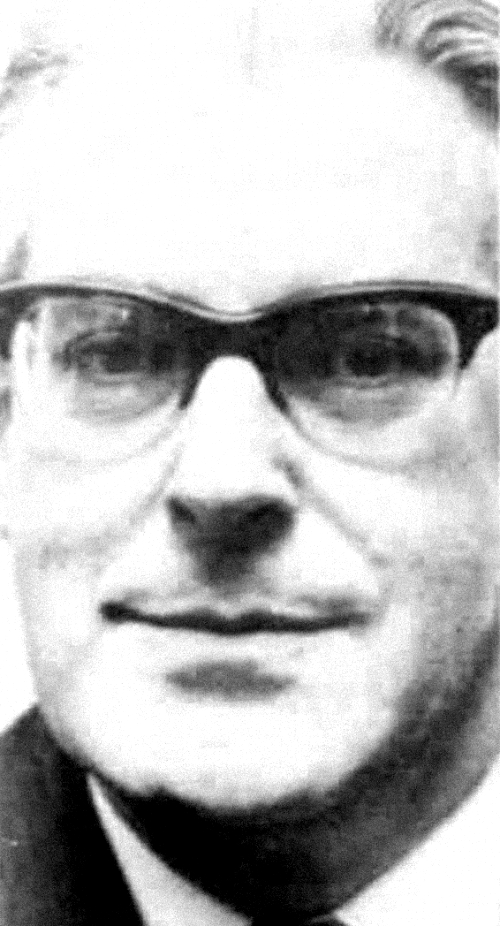
Mr. Scott, a grey-haired man who bus the personable, precise looks of a successful band leader, finds nothing unusual about his being where he is.
“You have to be a jack of all trades in this business,” he says. “The entertainment side is only one part of my mind. The two most enjoyable experiences I have personally had, and which provided me with real entertainment, were a production of Shakespeare’s Richard II and Peter Grimes at Aldeburgh.”
He is also conscious of BBC-2’s unique responsibility: “BBC-2 is in a special world TV position because it has been able to provide programmes on the basis of values that no other network has that I know.
“The baby I’ve got is of a slightly higher IQ than other babies. It’s quite an inheritance. And nobody’s intending to change that baby into a swinging chick.”
Since he has only been in his new chair for six weeks, Mr. Scott is still in the position of exploring the schedule rather than influencing it.